
Commercial Carpet Cleaning Boise: What Property Managers Should Know
If you manage a property in the Boise or Treasure Valley, Idaho area—whether it’s an office, apartment complex, or retail space—you’ve probably dealt with carpet issues more times than you’d like.
Tenants complain about stains. Common areas start to look worn. Carpets don’t seem to last as long as they should.
And the default response is often the same: “We need to clean them more often.”
But in most cases, frequency isn’t the real problem.
The issue is how the carpets are being cleaned—and what’s being left behind.
When commercial carpet cleaning is done correctly, and as part of a comprehensive commercial cleaning approach, carpets last longer, stay cleaner between services, and create fewer complaints overall. Let’s walk through what actually matters and how to approach it the right way.
Why Commercial Carpets Wear Out Faster
Commercial carpets take a different kind of stress than residential ones.
In Boise commercial properties, we consistently see:
Constant foot traffic
Dirt, dust, and debris tracked in from outside
Spills in common areas
Uneven wear patterns in hallways and entry points
Unlike homes, where use is predictable, commercial spaces experience continuous use. That means debris is pushed deeper into the carpet fibers throughout the day.
Over time, that buildup:
Breaks down fibers
Dulls appearance
Makes carpets harder to clean
Can cause tears or other damage
This is why some carpets look “worn out” long before they actually are.
If you’re curious about the difference between professional and DIY carpet cleaning, read our guide on Professional Carpet Cleaning vs. DIY Machines: What’s Actually Worth It?

The Hidden Cost of Improper Cleaning
Here’s what most property managers don’t get told:
Improper carpet cleaning can make carpets wear out faster—not slower.
This usually happens in two ways:
So instead of extending the life of the carpet, it actually shortens it. That’s why it’s crucial to ensure the cleaning job is done correctly to prevent these problems.
1. Residue Left Behind
Many cleaning methods rely on detergents or soaps that aren’t fully removed.
That residue:
Attracts new dirt
Causes carpets to re-soil quickly
Makes carpets look dirty again within weeks
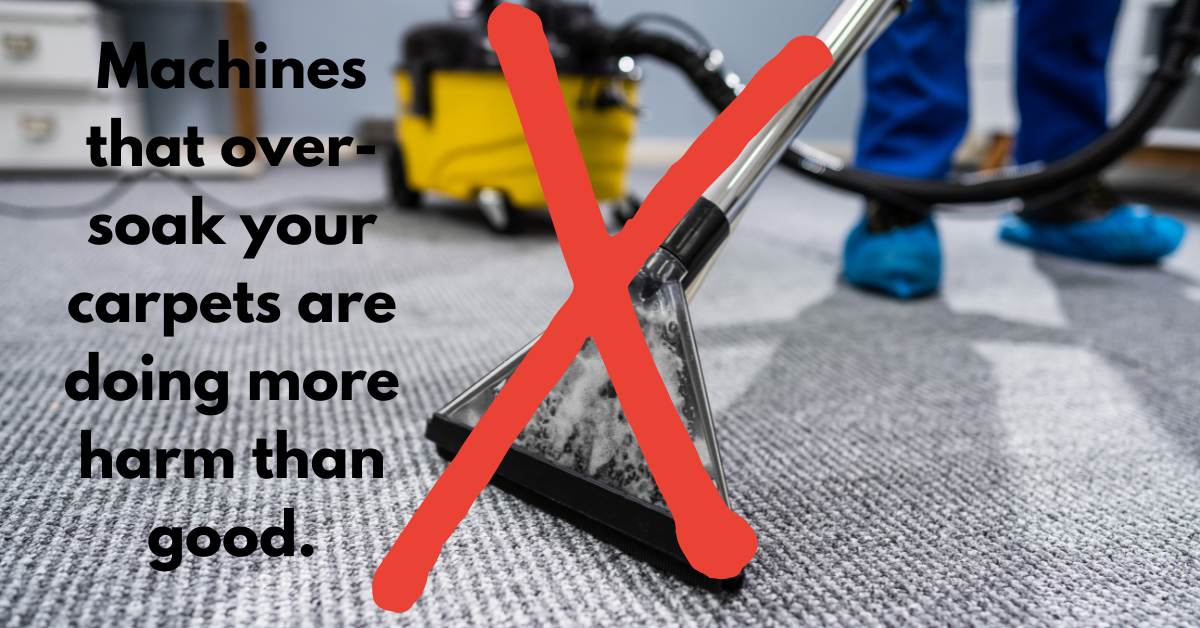
2. Over-Wetting the Carpet
Too much moisture—or poor extraction—leads to:
Longer dry times
Potential odor issues
Dirt sticking more easily after cleaning
In commercial settings, this often means:
Disruption to tenants or employees
Complaints about damp carpet
Faster reappearance of traffic patterns
So instead of extending the life of the carpet, it actually shortens it.
What Property Managers Should Expect From Commercial Carpet Cleaning
A properly executed commercial carpet cleaning should do more than just improve appearance.
It should:
Remove deep buildup and provide deep cleaning, not just surface dirt
Dry quickly with minimal disruption
Leave no residue behind
Extend the life of the carpet
Deep cleaning helps eliminate germs and contributes to a healthy environment for tenants and staff.
If those things aren’t happening, the method—not the frequency—is the issue.
Our Approach: Clean It Right, So You Don’t Need It Again Soon
At Superior Carpet & Air Duct Cleaning, we work with property managers across Boise, Meridian, Nampa, Eagle, and the Treasure Valley who want reliable results without constant re-cleaning. With years of carpet cleaning experience, our team delivers superior results you can trust.
Our method focuses on:
Low-moisture cleaning to reduce downtime
Thorough extraction to remove embedded debris
No residue left behind so carpets don’t attract dirt
Expert technicians with ongoing training to ensure the highest standards and efficient handling of all commercial carpet cleaning projects
We also tailor the cleaning approach based on the property:
Office spaces
Apartment complexes
Retail environments
High-traffic common areas
We are committed to customer satisfaction and building long-term relationships with our customers by consistently delivering excellent service.
The goal is simple: Get the carpets truly clean—and keep them that way longer.
How Often Should Commercial Carpets Be Cleaned?
There isn’t a single answer—but there is a clear framework.
Offices and Professional Spaces
Every 3–6 months is typical
Focus on maintaining appearance and comfort
Apartment Complexes and Rentals
Turnovers: as needed
Common areas: every 2–4 months
High-Traffic Commercial Spaces
Every 1–3 months depending on use
But here’s the key:
If carpets look dirty again quickly after cleaning, it’s not because they need to be cleaned more often—it’s because the cleaning wasn’t done properly.
Reducing Tenant Complaints (Without Increasing Costs)
Most tenant complaints about carpets fall into a few categories:
“They still look dirty”
“There’s a smell”
“They got dirty again right away”
All three are usually tied to incomplete cleaning or residue.
When carpets are cleaned correctly:
They look better longer
Odors are actually removed
Tenants notice the difference
This reduces:
Repeat service calls
Complaints
Unnecessary cleaning expenses
Commercial Carpet Cleaning That Works With Your Schedule
One of the biggest concerns for property managers is disruption.
That’s why we prioritize:
Flexible scheduling
Fast-dry methods
Minimal downtime
Most spaces can return to normal use quickly, without long closures or inconvenience to tenants or staff.
The Bottom Line: Frequency Matters Less Than Quality
You don’t need to clean commercial carpets constantly.
You need to clean them correctly.
When done right:
Carpets last longer
They stay cleaner between services
You reduce long-term costs
You create a better experience for tenants and clients
That’s the difference between maintenance that works—and maintenance that repeats.
Ready for Commercial Carpet Cleaning That Actually Lasts?
If you manage a property in Boise, Meridian, Nampa, Eagle, or the Treasure Valley and want carpet cleaning that holds up—not just looks good for a week, we’d be happy to help.
At Superior Carpet & Air Duct Cleaning, we focus on doing it right the first time so you don’t need it done again anytime soon.
Reach out today to schedule service or get a quote—and see the difference proper cleaning makes.
How to Choose the Right Commercial Carpet Cleaning Company in Boise
(A Practical Checklist for Property Managers Who Want It Done Right)
If you manage a commercial property in Boise or the Treasure Valley, you already know carpet issues don’t stay small.
They show up as:
Tenant complaints
Worn-looking common areas
Faster-than-expected replacement cycles
And when that happens, most companies focus on how often to clean.
The better question is:
Who’s cleaning it—and how are they doing it?
Because the wrong company doesn’t just waste your budget.
It creates more work, more complaints, and shorter carpet life.
Here’s how to evaluate it the right way.
1. Do They Understand Commercial Environments—or Just Residential Work?
Not all carpet cleaning companies are built for commercial spaces.
Commercial properties have:
Continuous foot traffic
High-use entry points and hallways
Different carpet materials and wear patterns
Scheduling constraints that don’t exist in homes
A company that primarily cleans residential homes may not understand how to handle:
Large square footage efficiently
Traffic lane restoration
Multi-unit or phased cleaning schedules
What to Look For
Proven experience with office buildings, apartments, and retail spaces
Ability to handle common areas + units + high-traffic zones
Clear understanding of property manager priorities (speed, consistency, minimal disruption)
Quick Check
Ask:
“What types of commercial properties do you clean regularly?”
If the answer is vague, or heavily residential-focused, that’s a signal.
You want a team that walks into your building and already knows what matters.
2. What Method Are They Using—and What Are They Leaving Behind?
This is where most property managers get burned.
Many companies focus on:
Getting carpets to look clean for a few days
But ignore:
What’s left behind after the cleaning
The two biggest problems we see in Boise commercial properties are:
Residue From Cleaning Solutions
Some methods rely on heavy detergents or soaps that aren’t fully extracted.
That residue:
Attracts new dirt
Causes carpets to re-soil quickly
Makes high-traffic areas look worn again fast
Over-Wetting the Carpet
Too much moisture—or poor extraction—leads to:
Long dry times
Odor issues
Faster dirt buildup after cleaning
This is especially problematic in:
Office spaces that need to reopen quickly
Apartment turnovers on tight timelines
Retail environments where appearance matters daily
What to Look For Instead
Low-moisture cleaning methods
Thorough extraction (not just surface cleaning)
Residue-free approach
Equipment designed for commercial scale and efficiency
At Superior Carpet & Air Duct Cleaning, we focus on removing buildup completely—without leaving behind anything that causes carpets to get dirty again faster.
That’s what actually extends the life of your carpets.
Quick Check
Ask:
“Will your process leave any residue behind?”
“How long before the carpet is fully dry and usable?”
If the answers aren’t clear, that’s a red flag.
3. Are They Built to Work With You—or Around You?
Even a good cleaning method fails if it disrupts your property.
Commercial carpet cleaning has to fit into:
Tenant schedules
Business hours
Turnover timelines
Maintenance coordination
This is where the difference between a vendor and a partner shows up.
What a Professional Operation Looks Like
Flexible scheduling (early mornings, evenings, phased work)
Clear communication before, during, and after service
Ability to prioritize high-visibility areas
Consistent results across multiple visits
Reputation Matters—But Look at the Right Signals
Don’t just look for volume of reviews. Look for:
Feedback from other property managers or businesses
Comments about reliability and consistency
Mentions of longer-lasting results, not just quick turnaround
Quick Check
Ask:
“How do you minimize disruption for tenants or staff?”
“Do you work with property managers regularly?”
The right company won’t hesitate—they’ll walk you through it clearly.
The Bottom Line: It’s Not About Cleaning More—It’s About Cleaning Right
Most commercial carpet issues don’t come from lack of cleaning.
They come from:
Incomplete cleaning
Residue left behind
Methods that don’t match the environment
When carpets are cleaned correctly:
They stay cleaner longer
Tenant complaints drop
Replacement cycles extend
Maintenance becomes predictable
That’s the shift.
Not more cleaning.
Better cleaning.
Commercial Carpet Cleaning Questions
How often should commercial carpets be cleaned in Boise?
Most offices benefit from cleaning every 3–6 months, while high-traffic areas may need more frequent service depending on use.
Why do commercial carpets get dirty again so quickly?
This is often caused by residue left behind during cleaning, which attracts new dirt faster.
What is the best carpet cleaning method for commercial properties?
Low-moisture, residue-free cleaning with proper extraction provides the best long-term results.
Does carpet cleaning disrupt business operations?
Not when done correctly. Fast-dry methods allow most spaces to be used the same day.
Is professional carpet cleaning worth it for property managers?
Yes. Proper cleaning extends carpet life, reduces complaints, and lowers long-term maintenance costs.