
The Critical Role of Duct Cleaning in Healthcare Facilities: Infection Control & Patient Safety
The ventilation system in your facility is more than a temperature control unit. In a healthcare setting, it is the lungs of the building. Your environmental services team may be scrubbing floors until they shine, but if the ductwork is neglected, your HVAC system is pushing bacteria and microscopic contaminants back into patient rooms every time the fan kicks on.
For healthcare facility managers across the Treasure Valley, from high-capacity hospitals in Boise to specialized clinics in Meridian, Nampa, Eagle, and Caldwell, the definition of "clean" is a moving target. It is not about aesthetics. It is about infection control and patient safety.
If your medical facility air duct cleaning has not been prioritized, you may be overlooking the invisible highway that moves pathogens throughout your entire building.
The Hidden Problem: Your HVAC System as a Pathogen Reservoir
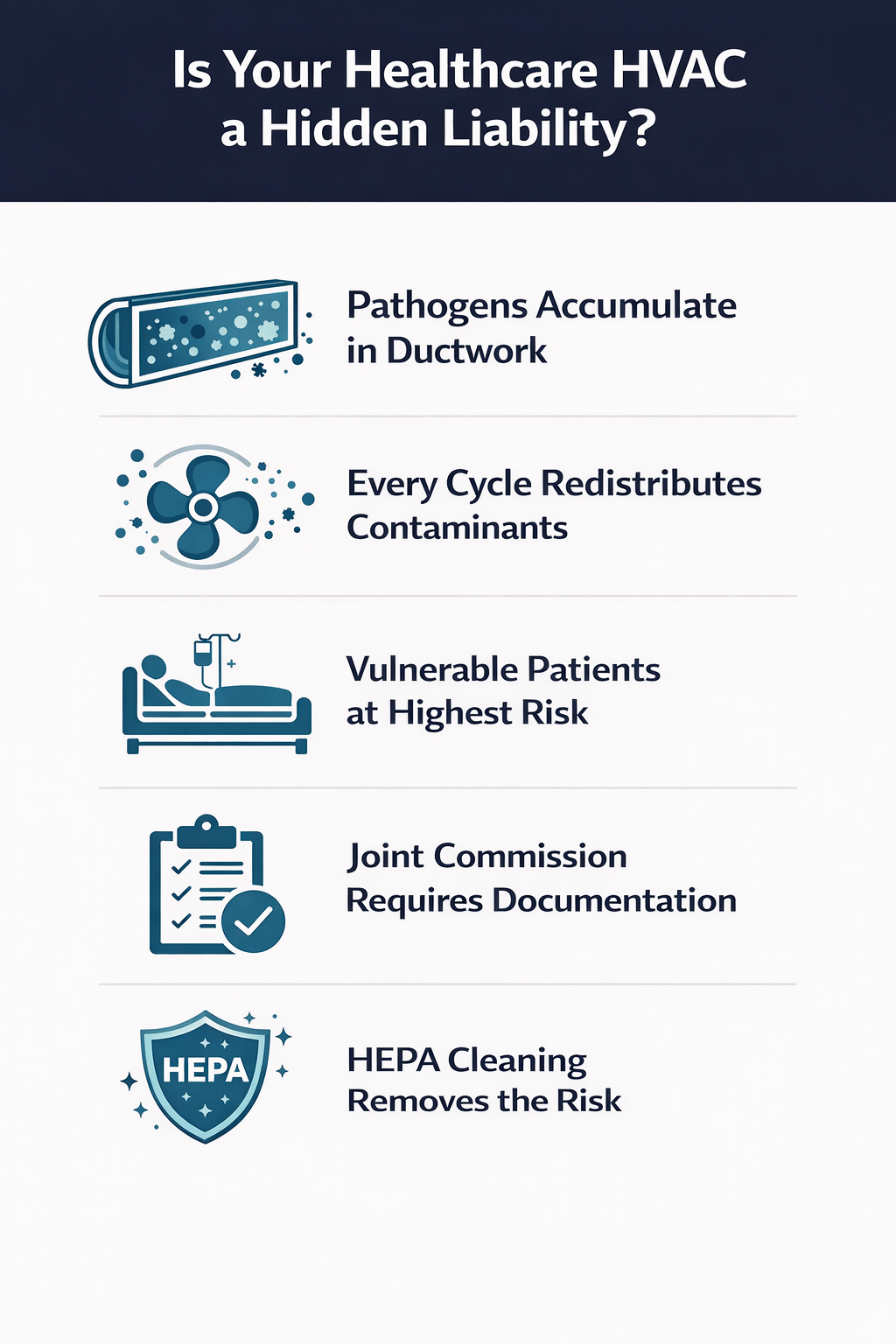
Ductwork is the perfect biological incubator. As air circulates through your facility, it carries far more than oxygen. It transports skin cells, lint, fine particulate matter, and microscopic debris shed by patients, staff, and visitors every hour of every day.
In a healthcare environment, that accumulated debris becomes a food source for bacteria and fungi to establish and multiply.
Two of the most dangerous organisms commonly found in contaminated hospital HVAC systems:
Aspergillus fumigatus, a fungal pathogen linked to fatal pulmonary infections in immunocompromised patients
Legionella pneumophila, the bacterium behind Legionnaires' disease, which thrives in water-cooled HVAC components
Once these contaminants are established in your duct system, every heating or cooling cycle becomes a redistribution event. Contaminated air moves from a reservoir in one part of the building into patient rooms, operating suites, ICUs, and waiting areas. It is a cycle of airborne transmission that exists entirely outside the reach of standard surface cleaning protocols.
A Local Problem That Makes It Worse
Boise area healthcare facilities face environmental pressures that accelerate this problem faster than most regions.
Seasonal inversions trap pollutants at ground level. Wildfire smoke, which has become increasingly severe each summer across the Treasure Valley, introduces fine particulate matter (PM2.5) directly into HVAC intakes. Your system ends up circulating higher concentrations of pollutants that settle as a biofilm substrate inside your ducts.
If your last professional cleaning predates the region's recent fire seasons, your system may already be compromised.
Who Is Most at Risk?
Not every patient carries the same vulnerability, but the highest-risk populations tend to be concentrated in the areas with the most demanding air quality requirements.
Immunocompromised patients in oncology, transplant, and HIV/AIDS units
Surgical and post-operative patients with open healing sites
ICU and NICU patients on ventilatory support
Elderly patients with diminished pulmonary function
Patients undergoing chemotherapy or radiation therapy
For these patients, a contaminated HVAC system is not a facilities issue. It is a direct clinical risk.
The CDC estimates that nearly 1.7 million healthcare-associated infections occur annually in U.S. hospitals, contributing to roughly 99,000 deaths and billions in non-reimbursable care costs.
Contaminated ventilation systems are a documented and underappreciated contributor to that number, particularly for Aspergillus, Legionella, and drug-resistant organisms.
What the Regulations Actually Require
Professional HVAC cleaning in a healthcare facility is not just a best practice. It is tied directly to accreditation standards your facility is already being evaluated against.
ASHRAE Standard 170 establishes mandatory minimum air change rates, pressure relationships, and filtration requirements for every clinical space. When duct debris restricts airflow, it can make it physically impossible to meet mandated air changes per hour, placing your facility in technical non-compliance during any survey.
Joint Commission Standard EC.02.05.01 requires facilities to manage risks associated with utility systems, including HVAC. Documented evidence of proactive maintenance, including duct cleaning records, is increasingly requested during reviews.
CMS Conditions of Participation require a demonstrably safe physical environment. Surveyors evaluating air quality management will look for documented maintenance schedules, filter change logs, and records of remediation.
"We clean the ducts when we notice a problem" is not a defensible position during a Joint Commission review. Proactive, documented cleaning cycles are what surveyors want to see.
Clinical-Grade Air Duct Cleaning: What It Should Look Like
Not all commercial air duct cleaning in Boise is equal, and in a healthcare setting, the method and equipment matter enormously.
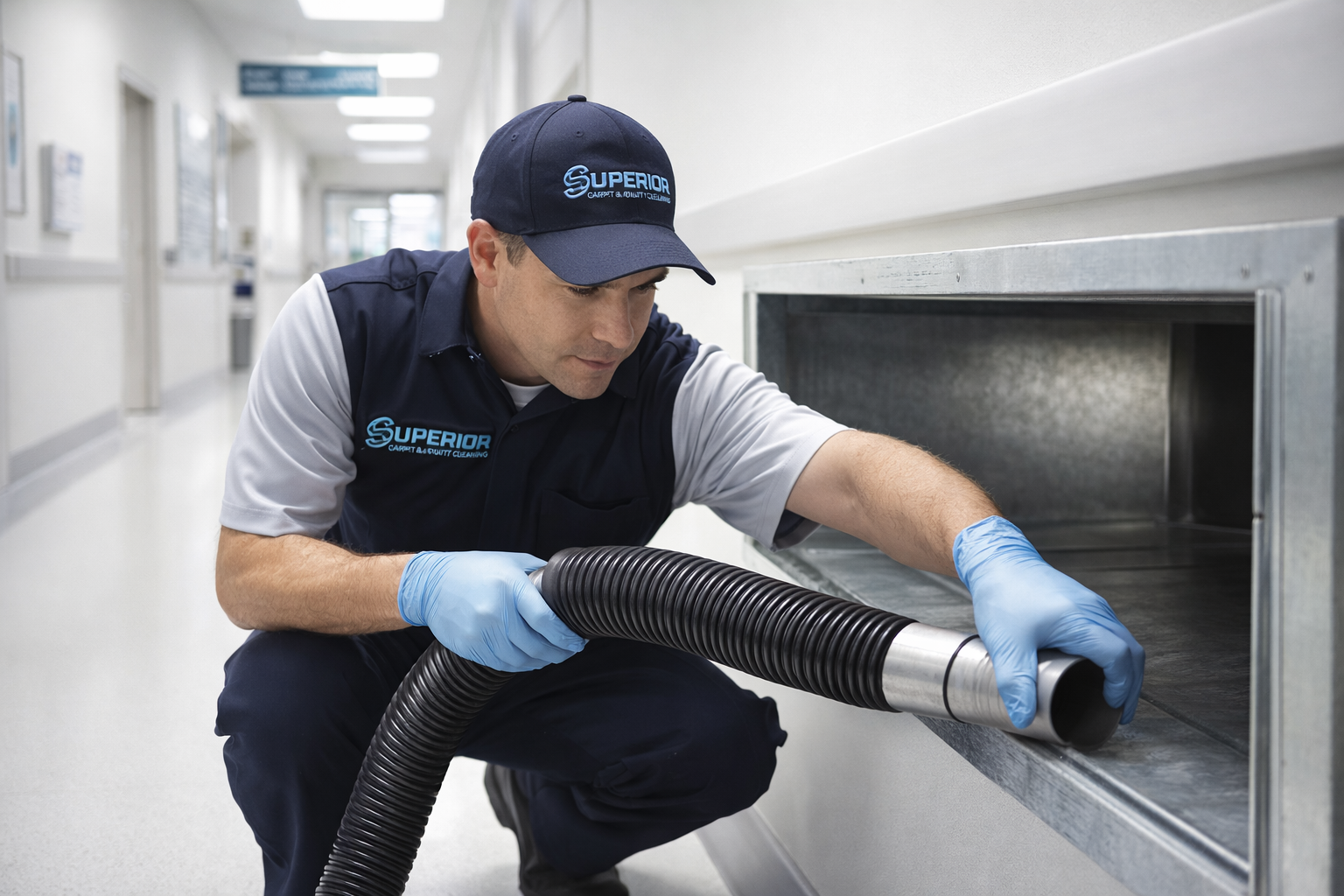
At Superior Carpet and Air Duct Cleaning, we treat your facility with the clinical rigor it deserves. We serve healthcare facilities throughout Boise, Meridian, Nampa, Eagle, and Caldwell with a process built specifically for medical environments.
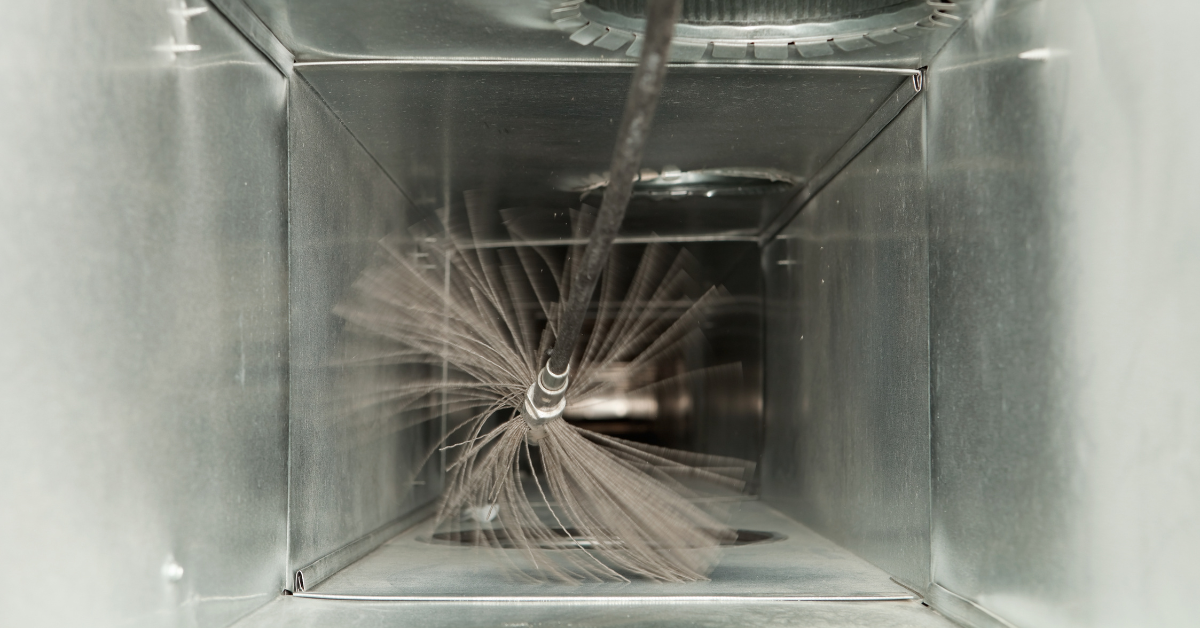
HEPA-Filtered Extraction We use industrial HEPA-filtered vacuum systems that capture at least 99.97% of airborne particles as small as 0.3 micrometers. Once a pathogen is dislodged from your duct walls, it is captured and removed from the building entirely, not recirculated during the cleaning process.
Negative Pressure Containment Our technicians establish negative pressure fields throughout the work area. No dust, debris, or aerosolized contaminants escape into active clinical areas while work is underway. Your facility stays safe and operational throughout the service.
Microbial Biofilm Removal Surface debris removal is only part of the picture. We focus on eliminating the organic biofilm that allows bacteria and fungi to thrive inside your vents, addressing the root cause of chronic indoor air quality problems rather than just the symptoms.
For a full overview of our commercial cleaning services for healthcare facilities, medical offices, and high-traffic commercial spaces in the Treasure Valley, including carpets, hard surface floors, and dryer vents, visit our commercial services page.
Healthcare Facility HVAC Audit Checklist
Use this checklist to evaluate your current system before your next survey or inspection.
Filter efficiency: Are you running MERV 13 or MERV 14 filters? ASHRAE 170 specifies minimum filtration by space type.
Visible biological growth: Check supply registers, return grilles, and cooling coils for mold, discoloration, or standing moisture. These are the most common early indicators of active microbial growth.
Airflow rates: Confirm debris accumulation is not restricting your system from meeting mandated air changes per hour in clinical spaces.
Cleaning records: Industry standards recommend professional deep cleaning every 3 to 5 years for most facilities. High-acuity areas like operating suites and NICUs may warrant more frequent service. Not sure what the right schedule looks like for your building type? Our guide on how often air ducts should be cleaned in Boise homes and commercial buildings breaks it down by property and use type. If you cannot locate documentation of your last cleaning, treat that as your answer.
Pressure relationships: Confirm that debris or airflow restriction is not compromising the positive or negative pressure required for isolation rooms and operating theaters. A disrupted pressure relationship silently undermines your infection control program around the clock.
Treasure Valley Healthcare Facility FAQ
What areas do you serve?
We provide medical facility air duct cleaning throughout Boise, Meridian, Nampa, Eagle, and Caldwell, serving facilities ranging from small private practices and dental offices to large multi-wing medical centers across Ada and Canyon Counties.
How often should hospital air ducts be cleaned?
Industry standards recommend every 3 to 5 years as a baseline. Given Treasure Valley conditions including high seasonal dust and wildfire smoke, we recommend erring toward the shorter end of that range. Operating rooms, oncology units, and NICUs should be evaluated for more frequent service given the elevated patient risk in those spaces.
Does professional duct cleaning support Joint Commission or CMS compliance?
Yes. Clogged or contaminated ducts can restrict airflow and prevent your system from meeting mandated air change rates. Documented professional cleaning also serves as evidence of a proactive infection prevention program during accreditation surveys.
Is professional air duct cleaning actually worth the investment?
For a healthcare facility, absolutely. The financial and clinical cost of a single HAI event far exceeds the cost of preventive maintenance. If you want a deeper look at how to think through the value of duct cleaning, our post on whether air duct cleaning is really worth it covers the full picture.
Can HEPA air duct cleaning remove wildfire smoke residue?
Yes. Wildfire smoke carries fine particulate matter that bypasses standard filters and accumulates inside ductwork. Our industrial HEPA extraction is specifically designed to capture those microscopic particles and remove them from your system entirely.
Will cleaning disrupt our 24-hour patient operations?
No. Our HEPA containment barriers and negative pressure setup allow cleaning to proceed without releasing contaminants into active clinical areas. We schedule around your facility's operational needs.
Does poor indoor air quality affect hospital operating costs?
Two ways. Contaminated ducts force your HVAC system to work harder, increasing energy costs and accelerating mechanical wear. More significantly, HAIs are one of the largest categories of non-reimbursable care costs in U.S. hospitals. Proactive air quality management is one of the highest-return investments a facility can make.
Do you provide documentation for audits and inspections?
Yes. We provide thorough written documentation of the cleaning scope and findings, which can be presented during Joint Commission surveys, CMS inspections, or internal safety reviews.
Clean Air Is a Clinical Standard, Not a Maintenance Afterthought
In a residential setting, dirty air ducts are an inconvenience. In a healthcare facility, they are a clinical, financial, and regulatory liability. Every hour your system runs with accumulated contamination, it is working against the infection control program your clinical team is working hard to maintain.
The healthcare facilities across the Treasure Valley serve some of our community's most vulnerable patients. They deserve air that is managed with the same rigor as every other dimension of their care environment.
If you are not certain when your facility's ducts were last professionally cleaned, give us a call. We serve healthcare facilities throughout Boise, Meridian, Nampa, Eagle, and Caldwell and would be glad to help you take stock of where things stand.