
Your Dryer Vent Is a Fire Hazard. Here Is How to Know Before It Is Too Late.
You clean the lint trap. Every single load. You are doing the right thing.
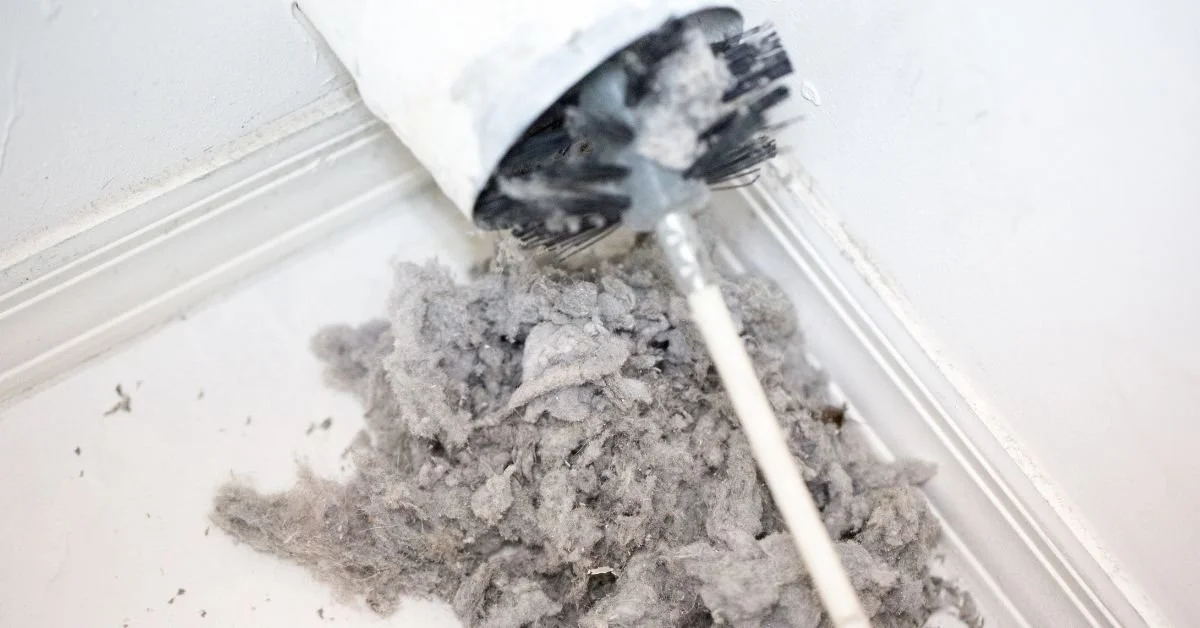
Here is what most homeowners do not know: the lint trap catches roughly 25 percent of the lint your dryer produces. The rest moves through the vent line and builds up inside the duct, around elbows and bends, against the exterior cap, layer by layer, load after load.
That lint is highly flammable. Your dryer produces a lot of heat. You can see where this goes.
According to the National Fire Protection Association, dryers cause an average of 15,970 home structure fires every year in the United States, with 92 percent of those caused by clothes dryers. The leading cause is failure to clean. More than a third of all dryer fires come back to lint buildup in the vent system.
This is not a fringe risk. It is one of the most common and most preventable home fire hazards in America. And most of the Boise homeowners we talk to have never had their dryer vent professionally cleaned.
Why the Lint Trap Is Not Enough
The lint trap is designed to catch the large debris released during a drying cycle. It does its job reasonably well at the surface level. The problem is everything it misses.
Microscopic lint fibers and fine particles pass through the screen on every cycle. They enter the vent duct behind your dryer and travel toward the exterior cap on the outside of your home. Along the way they stick to the walls of the duct, accumulate around bends, and compress into increasingly dense blockages over time.
The longer the vent run and the more bends it has, the faster and more severely it clogs. Many Treasure Valley homes have dryer vents that run through interior walls, up through the attic, or across long horizontal stretches before exiting the building. Those configurations collect lint significantly faster than a short, straight vent run.
What makes this particularly dangerous is the combination of two things that happen simultaneously when a vent is blocked.
First, airflow is restricted. The hot, moist air your dryer is trying to expel has nowhere to go. Temperatures inside the vent and the appliance itself climb well beyond normal operating ranges.
Second, you now have superheated, oxygen-starved air in direct contact with a dense, highly flammable material. All it takes is a spark from a failing heating element or the heat itself reaching ignition temperature.
The fire starts inside your wall. By the time you smell smoke, it has often already been burning for minutes.
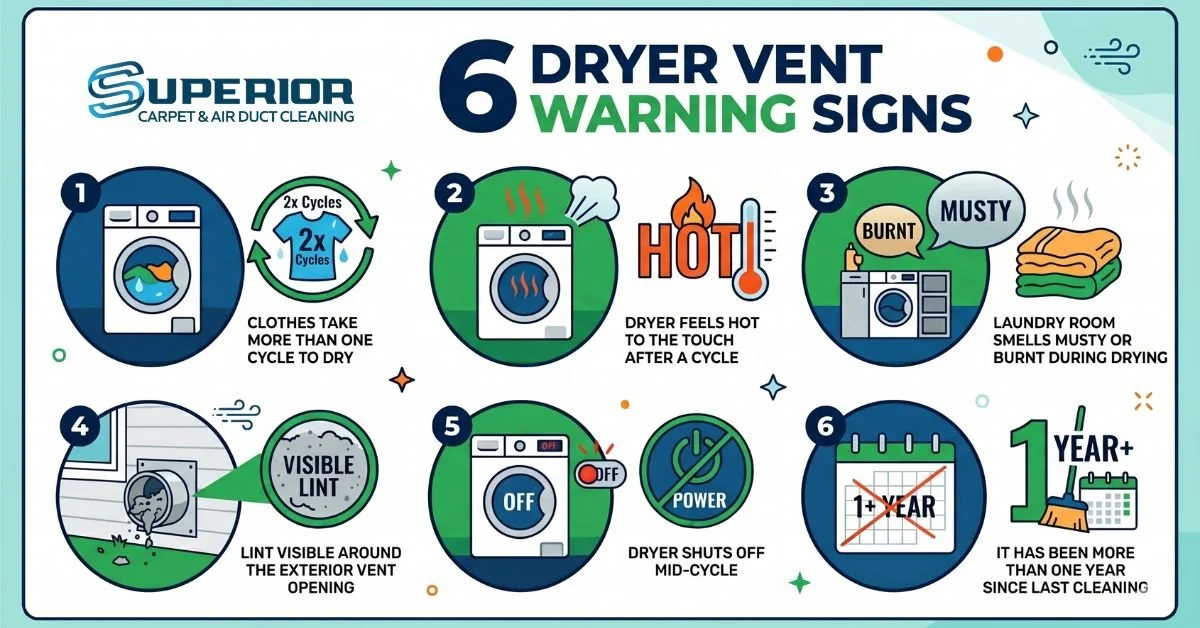
6 Warning Signs Your Dryer Vent Needs Attention Now
We have cleaned dryer vents across Boise, Meridian, Nampa, Eagle, and Caldwell and the homes that concern us most are the ones where the warning signs have been present for months but went unrecognized. Here is what to watch for.
1. Clothes take more than one cycle to dry. This is the most common early indicator and the one most people explain away. When a vent is partially blocked, your dryer cannot move air efficiently. Heat and moisture stay trapped in the drum. A full load that used to dry in 45 minutes now takes 90. If this is happening in your home, the vent is the first thing to check.
2. The dryer feels hot to the touch after a cycle. Your dryer's exterior should be warm, not hot. If the top or sides of the appliance are uncomfortably hot after a normal cycle, the machine is overheating. Blocked airflow is the most common cause.
3. The laundry room smells musty or burnt during drying. A burning smell during operation is a serious warning. It can indicate lint close to ignition temperature inside the vent. A musty smell suggests trapped moisture, which can promote mold growth in the duct. Neither should be ignored.
4. Lint is visible around the exterior vent opening. Walk outside and look at where your dryer vent exits the building. If you see lint accumulation around the cap or flap, the vent is pushing material back out because the interior is already too congested to move it through properly.
5. The dryer shuts off mid-cycle. Modern dryers have thermal safety switches designed to shut the appliance down if it reaches a dangerous temperature. If your dryer is cutting out before a cycle finishes, it is protecting itself from the heat buildup that a blocked vent is causing.
6. You cannot remember the last time it was cleaned. If you have lived in your home for more than a year and cannot recall a professional dryer vent cleaning, it is overdue. The NFPA recommends annual cleaning for most households, more frequently for large families or anyone who does multiple loads per day.
What You Can Do Yourself
We believe in giving homeowners practical tools, not just reasons to call us. Here is what you can check and maintain between professional cleanings.
Clean the lint trap every single load without exception. You are likely already doing this. Keep doing it. It is the single most effective thing a homeowner can do to slow lint accumulation in the vent.
Vacuum behind and around the dryer twice a year. Pull the dryer away from the wall and vacuum the area behind it, including the back of the appliance and the first section of flexible duct. Lint accumulates in this zone and even a basic vacuum removes a meaningful amount of material.
Check the exterior vent cap seasonally. Go outside and inspect the vent cap on the side or roof of your home. Make sure the flap opens freely and is not blocked by lint, bird nests, or debris. A stuck or blocked cap is one of the leading causes of accelerated lint buildup indoors.
Check your duct material. If your dryer is connected to a flexible plastic or foil accordion-style duct, it is a fire hazard regardless of how clean it is. These materials trap lint at every ripple, restrict airflow, and can melt or ignite. Rigid metal duct is the only material recommended for dryer vent runs. If you have the accordion-style flex duct, it should be replaced.
Do a simple airflow test. Go outside while the dryer is running and hold your hand near the exterior vent cap. You should feel a strong, steady stream of warm air. If the airflow feels weak or intermittent, the vent is partially blocked.
These steps genuinely help and we encourage every homeowner to do them regularly. What they cannot do is remove the compacted lint that has built up deep in the duct over months or years. That requires professional equipment.
What Professional Dryer Vent Cleaning Actually Does
The difference between a DIY clean and a professional clean comes down to two things: reach and extraction power.
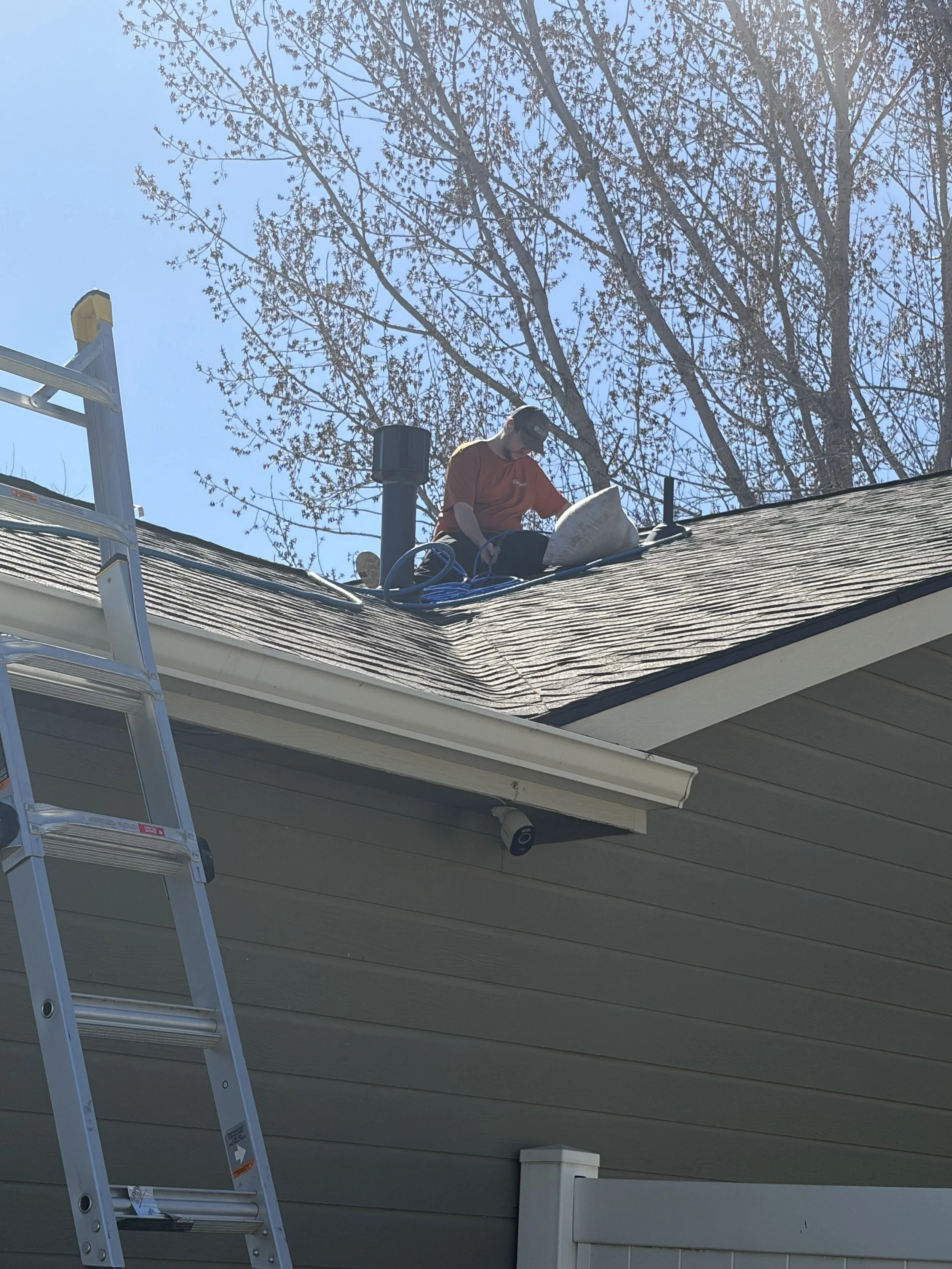
Most homeowners can clean the first foot or two of duct behind the dryer. Professional dryer vent cleaning tools are designed to reach the full length of the vent run, including through bends, elbows, and long horizontal sections that a vacuum attachment cannot access.
We use rotary brush systems that mechanically agitate and dislodge compacted lint from the interior walls of the duct along its entire length. That material is then extracted from the system rather than just pushed toward the exterior. We also inspect the duct material during cleaning, identify any sections that are crushed, disconnected, or improperly installed, and check the exterior cap for proper operation.
What we see consistently in homes across the Treasure Valley is that the lint removed during a professional cleaning is not fluffy and loose. It is compressed, dense, and in many cases partially discolored from heat exposure. That is lint that was close to causing a problem.
The process takes less than an hour in most homes. For a service that addresses one of the most statistically significant fire risks in residential properties, it is one of the most straightforward investments a homeowner can make.
The Boise Climate Factor
Something we notice specifically in the Treasure Valley is that our seasonal weather patterns affect dryer use in ways that accelerate lint accumulation faster than the national averages suggest.
Boise's cold winters mean heavier clothing, more layers, more frequent drying, and more lint per load. Homes here often run their dryers considerably more in the October through March window than homes in milder climates. Combined with the fact that many Treasure Valley homes have longer vent runs due to single-story construction with exterior walls on one side of the laundry room, the lint load on local systems tends to be higher than a once-a-year cleaning schedule accounts for.
Families with multiple people in the household or anyone doing more than one load per day should consider cleaning every six months rather than annually.
The Connection Between Dryer Vents and Your Air Duct System
One thing we mention to clients when we are cleaning dryer vents is the broader picture of home air system maintenance. Your dryer vent and your HVAC duct system are separate, but the habits that lead to neglected dryer vents tend to apply to ductwork as well.
We regularly see homes in Boise and the surrounding area where both systems have gone years without professional attention. Addressing them together is the most efficient approach and gives you a comprehensive picture of your home's air quality and safety. For more on what builds up in residential ductwork and what professional cleaning addresses, our post on whether air duct cleaning is really worth it covers the full story.
Dryer Vent Cleaning FAQ
How often should I have my dryer vent professionally cleaned? The NFPA recommends at least once per year for most households. Families doing multiple loads daily, homes with long vent runs, or anyone using their dryer heavily through fall and winter should consider every six months. If you have never had it cleaned or cannot remember the last time, schedule it now regardless of when you are in the year.
Can I clean my dryer vent myself? You can clean the accessible sections near the dryer with a vacuum and a brush kit. This is worth doing between professional cleanings. What DIY cleaning cannot address is the full length of the duct, particularly through bends and long runs where the most significant accumulation occurs. Professional equipment reaches and extracts the full duct in a way consumer tools cannot.
What does professional dryer vent cleaning cost in Boise? Pricing varies based on vent length and configuration. We provide transparent, upfront quotes with no hidden fees. Call us at (208) 989-2999 or request an estimate online and we will give you a clear number before we schedule anything.
Is dryer vent cleaning the same as air duct cleaning? No. They are separate systems. Your dryer vent exhausts hot, moist air and lint from the dryer to the outside of your home. Your HVAC air ducts circulate conditioned air throughout your home. We service both. Many clients in Boise schedule both at the same time for efficiency.
My clothes are drying fine. Do I still need it cleaned? Yes. A vent can be accumulating significant lint buildup long before drying performance is noticeably affected. By the time clothes are consistently taking two cycles to dry, the vent is already substantially blocked. Annual cleaning prevents the problem from reaching the point where you would notice it.
What are the signs my dryer vent is a fire hazard right now? The six most important signs are: clothes taking more than one cycle to dry, the dryer feeling excessively hot after a cycle, a burning smell during operation, visible lint around the exterior vent cap, the dryer shutting off before a cycle finishes, and not being able to remember the last time the vent was professionally cleaned. Any one of these warrants immediate attention.
Do you clean dryer vents in Meridian, Nampa, and Eagle? Yes. We provide professional dryer vent cleaning throughout Boise, Meridian, Nampa, Eagle, Caldwell, Kuna, and Star, as well as North Idaho areas including McCall and Cascade.
This Is Not a Scare Tactic. It Is a Simple Maintenance Call.
We are not trying to alarm anyone. Most dryer vent fires are entirely preventable. That is the point. This is not a complicated or expensive service and it is not something that requires a crisis to justify.
It is annual maintenance for a system in your home that produces heat, generates flammable material, and has a documented history of causing residential fires when neglected.
If you are in Boise, Meridian, Nampa, or anywhere across the Treasure Valley and you cannot remember the last time your dryer vent was professionally cleaned, that is enough reason to schedule it. Give us a call at (208) 989-2999 or request a free estimate online. We will take care of it in under an hour.
While we are there, we are happy to take a look at your air duct system as well. Most homeowners find it makes sense to address both at the same time.