
The Real Health Benefits of Air Duct Cleaning for Allergy and Asthma Sufferers
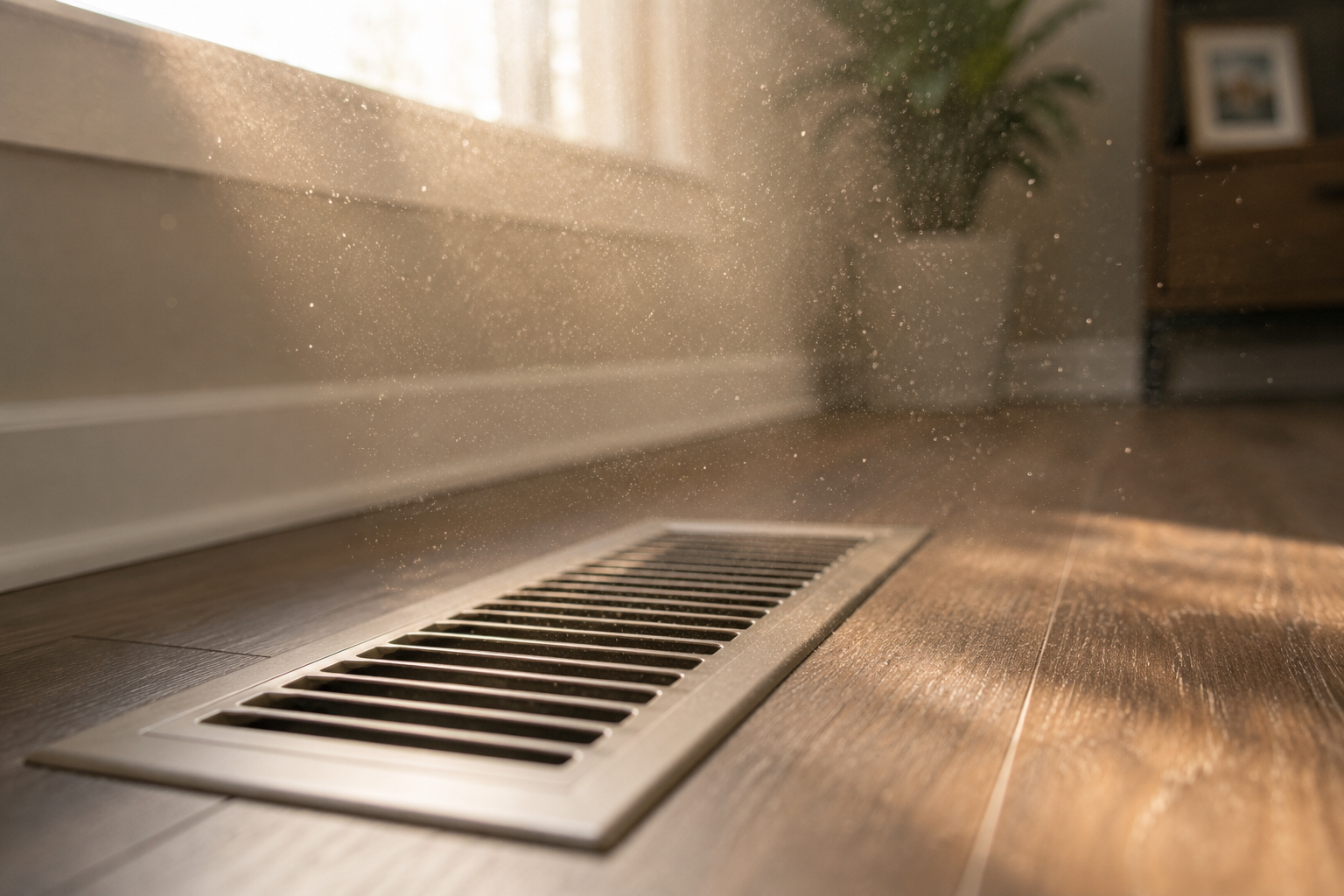
Clean air ducts reduce the dust mites, mold spores, and pet dander that get pushed through your home every time the HVAC system runs, which can mean fewer allergy flare-ups and easier breathing for people with asthma. For homeowners across the Treasure Valley and the Wood River Valley, where we get dry summers, wildfire smoke, and older ductwork is common, this is one of the most overlooked steps we see in managing allergies in your home.
If you or someone in your house deals with allergies or asthma, you've probably already tried the obvious fixes. New air filters, a HEPA vacuum, maybe an air purifier in the bedroom. What most people never think to check is the ductwork running behind their walls, quietly recirculating the same irritants those other fixes are trying to remove. The health benefits of air duct cleaning show up in a place most homeowners never think to look, and for allergy or asthma sufferers, that's often the missing piece.
Here in the Treasure Valley, our homes deal with a specific mix of triggers. Dry, dusty summers, wildfire smoke season, and a lot of older housing stock with original ductwork all add up. Out in the Wood River Valley, we see more mountain dust, wood smoke from stoves, and seasonal humidity swings create their own version of the same problem. Either way, what's sitting inside your ducts matters just as much as what's floating through the room.
Dust Mites Live Where You Can't Vacuum
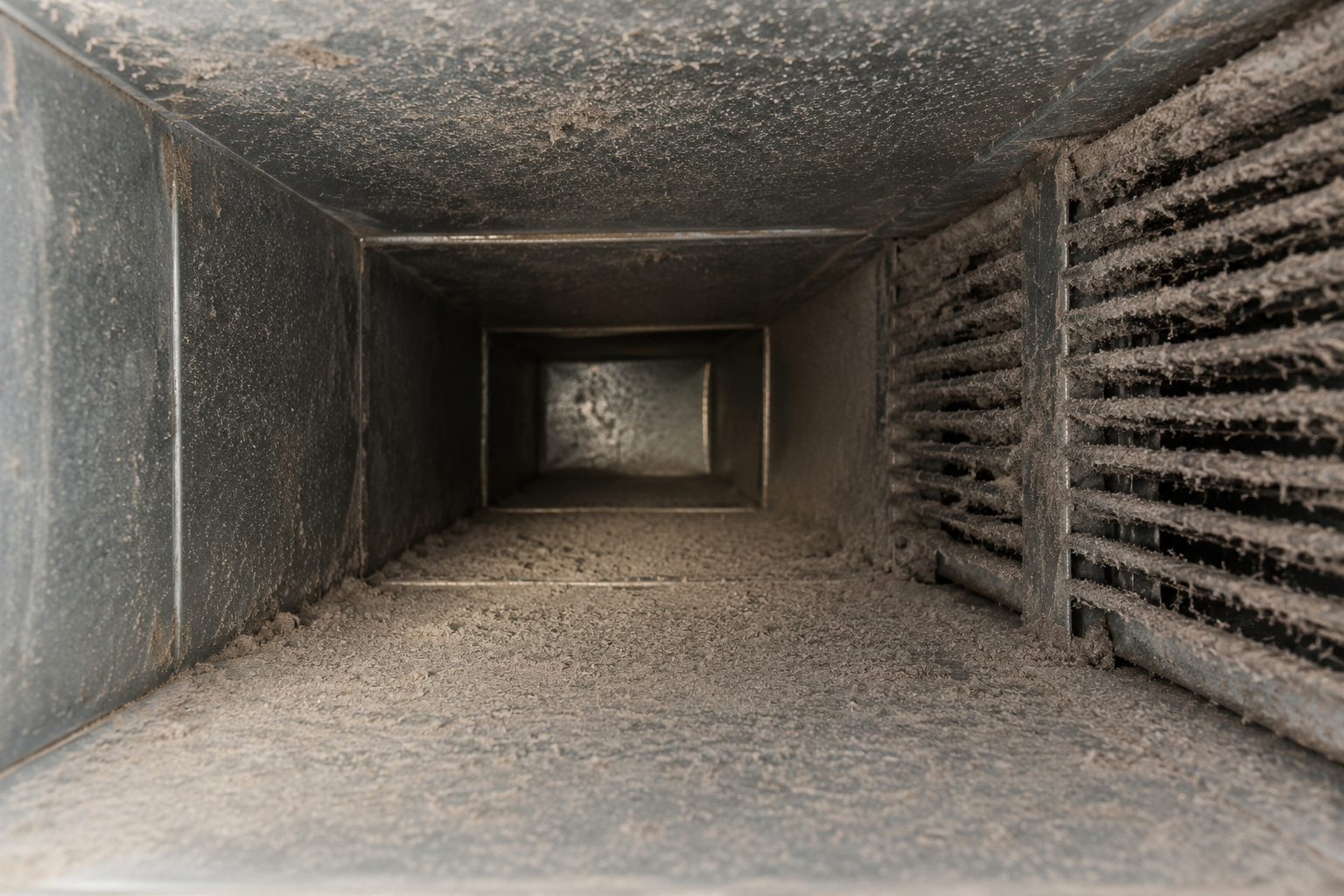
Dust mites don't float through the air on their own. They settle into fabric and dust, then get stirred up and pushed around every time your HVAC system kicks on. Your ductwork is one of the few places in the home that never gets vacuumed, wiped down, or aired out, which makes it an ideal environment for dust mites in HVAC systems to build up undisturbed for years.
This matters more than it sounds like it should. Dust mite allergens are considered one of the most common year-round indoor triggers for allergy and asthma symptoms, and once they've built up inside a duct system, every heating or cooling cycle sends another wave through your living space. This is a big part of what drives indoor air quality allergens higher than most homeowners expect, even in a home that looks perfectly clean on the surface. Cleaning the ducts doesn't eliminate dust mites completely, nothing does, but it removes a reservoir that's been quietly refilling your air for as long as it's gone unaddressed.
This is especially true in Treasure Valley homes built before the 2000s, where original ductwork has had decades to collect buildup nobody has ever seen or touched.
Mold Spores Hiding in the Dark
Ductwork is dark, often slightly humid, and rarely disturbed, which happens to be exactly what mold needs to take hold. A small amount of condensation near a vent, a humid summer, or a slow leak near the HVAC unit can be enough to start a colony that then spreads spores throughout the house every time the system runs.
Where Does the Moisture Come From?
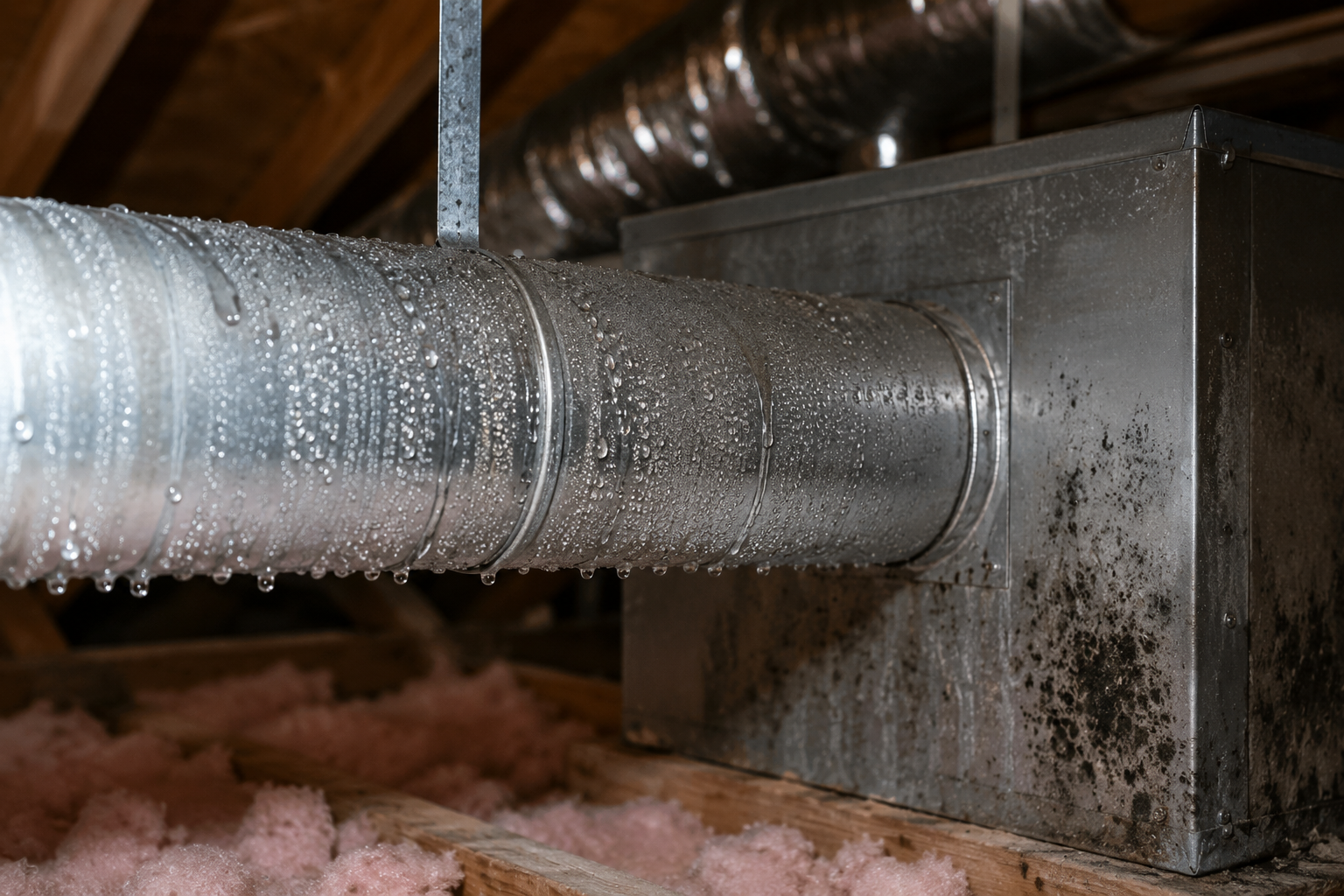
Most homeowners assume mold requires an obvious leak, but a poorly insulated duct running through a hot attic can sweat enough condensation on its own to support growth over time. The same goes for ducts near a bathroom exhaust or a humid basement. None of these sources are dramatic, which is exactly why they go unnoticed for so long. Basements in Boise and Meridian homes are common culprits, especially in houses where the ductwork runs through an unfinished space.
What It Can Do Once It's Circulating
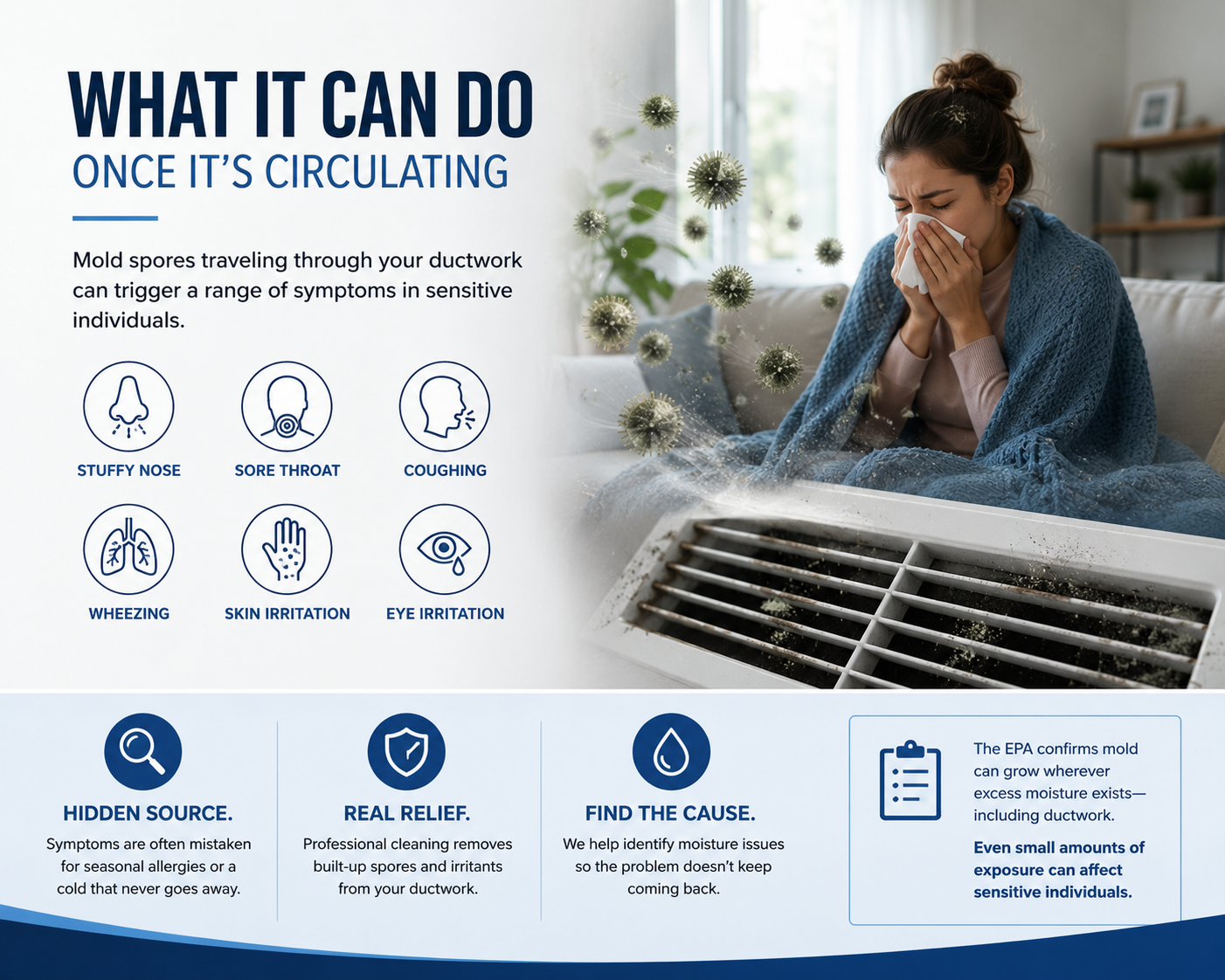
Once mold spores are traveling through your ductwork, they can trigger a stuffy nose, sore throat, coughing, wheezing, or skin irritation in sensitive individuals.
The EPA notes that mold and mildew can develop anywhere excess moisture is present long enough, ductwork included, and that people with mold sensitivities can react to even small amounts of ongoing exposure. People with asthma or existing mold allergies tend to feel it the most.
This is part of what makes mold spores in ductwork such a persistent problem: the source is hidden, so the symptoms often get blamed on something else entirely, like seasonal allergies or a cold that never quite goes away. A professional cleaning removes the spores that have already accumulated and gives you a clear look at whether moisture is actually the underlying issue.
Pet Dander and the Never-Ending Cycle
If you have pets, you already know their hair and dander find their way into every corner of the house. What's less obvious is how much pet dander in air ducts ends up inside the duct system itself, where it sits until the next heating or cooling cycle pushes it right back into the room you just vacuumed. This creates a cycle that can make it feel like allergy symptoms never fully go away, no matter how often you clean the visible surfaces of your home. Multi-pet households across Eagle, Star, and Kuna tend to notice this the most, since the volume of dander being generated simply outpaces what a filter alone can catch.
What This Means If You Have Asthma

Asthma reacts to airborne triggers in a more immediate way than typical allergies. Dust, mold spores, and pet dander circulating through a home's air can bring on wheezing, chest tightness, or a flare-up that feels like it came out of nowhere.
Managing air duct cleaning asthma symptoms starts with understanding where those triggers actually live, and for a lot of households, that's the ductwork rather than the surfaces they're already cleaning regularly. Dust mites are considered one of the most common indoor triggers for people with asthma, and ductwork is one of the largest hidden reservoirs of that trigger in most homes.
Reducing what's circulating through your HVAC system won't replace a treatment plan or medication, but it removes one more variable that could be working against you every time the furnace or AC turns on. This matters just as much in the Wood River Valley, where wood-burning stoves add another layer of particulates to the mix during colder months.
How Air Duct Cleaning Actually Helps
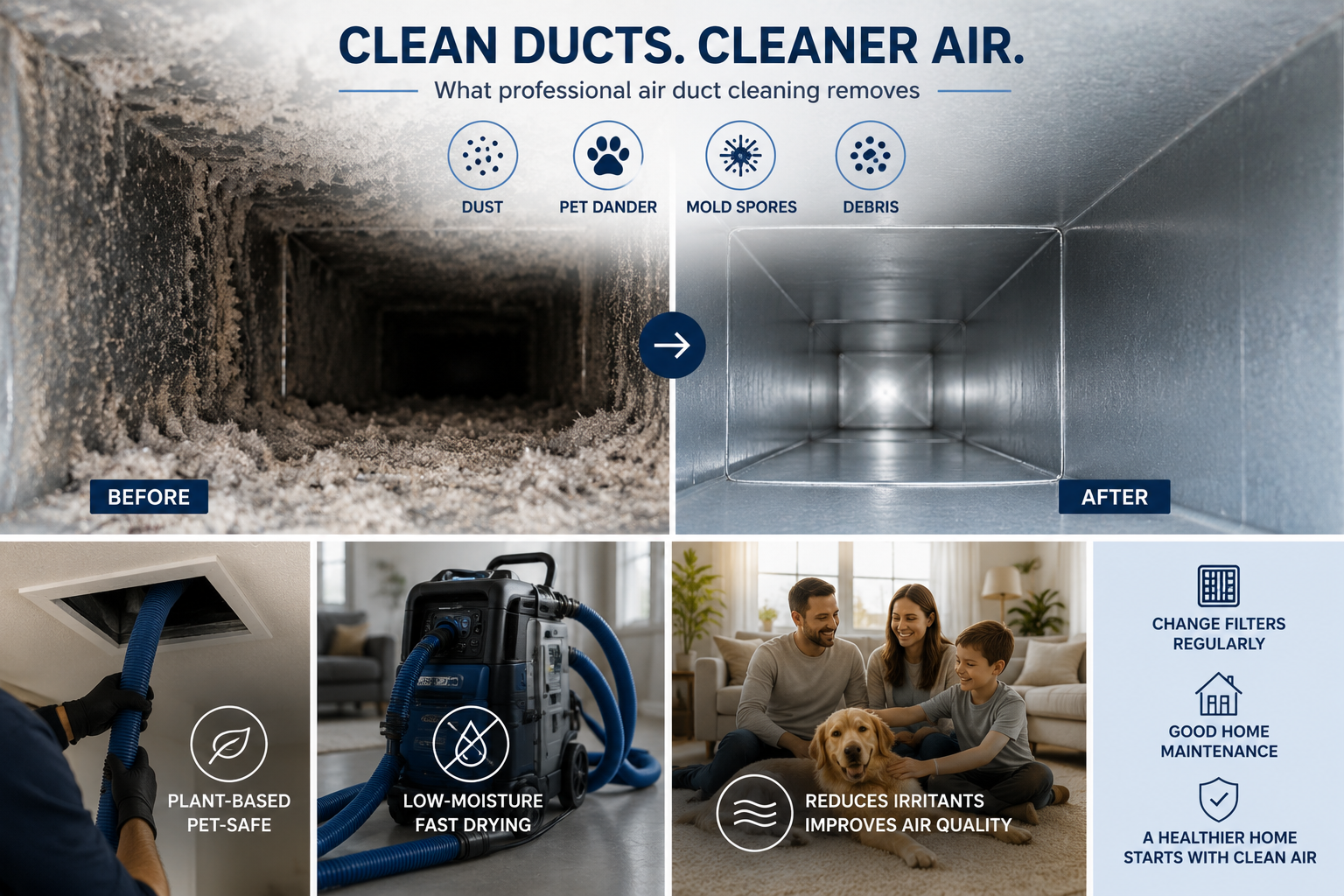
A professional cleaning physically removes the buildup sitting inside your ductwork rather than just masking it. That includes the dust, dander, and any mold growth that's accumulated over months or years, along with anything trapped in the supply and return vents themselves.
This is where air duct cleaning allergy relief actually comes from: not a one-time fix, but the removal of a reservoir that would otherwise keep refilling your air. We use plant-based, pet-safe solutions throughout the process, and our low-moisture approach means your system is back in service fast, without introducing extra moisture that could feed the exact mold problem we're trying to prevent.
It's worth being honest about what this does and doesn't do. Duct cleaning is not a cure for allergies or asthma, and it works best as one part of a bigger plan that includes regular filter changes and good general home maintenance.
What it does reliably provide is a real reduction in the amount of irritants available to circulate through your air, which for a lot of families across the Treasure Valley and the Wood River Valley makes a noticeable difference in day-to-day comfort.
Signs Your Ducts Might Be Making Things Worse
A few patterns tend to show up when ductwork is contributing to allergy or asthma symptoms at home:
Symptoms that get worse shortly after the heat or AC turns on
"Seasonal" allergies that never really go away, even indoors
Waking up congested or with a scratchy throat
Feeling noticeably better at work, at a friend's house, or while traveling
If any of that sounds familiar, your ductwork is worth a closer look before assuming the cause is something else entirely.
Simple Steps Between Cleanings

You don't have to wait for a professional visit to make a dent in the problem. Regular vacuuming with a HEPA filtration vacuum helps keep surface-level dust and dander from building up in the first place, and staying current with your HVAC filter changes keeps a good amount of debris from reaching the ductwork at all.
Keeping indoor humidity in a moderate range also helps, since both dust mites and mold thrive in damp conditions and struggle in drier air. It's also worth remembering that dust and dander settle into more than just your air system. Routine carpet cleaning and upholstery cleaning address the same allergens in the places you actually sit and walk every day, so pairing those with duct maintenance covers the full picture rather than just one piece of it.
A Cleaner Home Starts With What You Can't See
The health benefits of air duct cleaning are easy to overlook simply because ductwork is out of sight. But for anyone managing allergies or asthma at home in Eagle, Boise, Meridian, Sun Valley, or Ketchum, what's circulating through that system matters just as much as what's sitting on the counters and floors. If it's been a while since your ducts have had any attention, or your symptoms just don't seem to have an obvious cause, it's worth taking a closer look at what's behind your walls.
Not sure where your home stands? Our professional air duct cleaning service includes a full inspection so you know exactly what's in your system before any work begins, and we can walk you through what we find in plain terms.
Call (208) 989-2999 to schedule your cleaning, or reach out through our contact page to get started.
FAQ
Can air duct cleaning cure my allergies or asthma? No, but it can meaningfully reduce the amount of dust, mold, and dander circulating through your home, which for many people means fewer flare-ups and easier breathing.
How do I know if my air ducts are making my allergies worse? Symptoms that worsen shortly after the HVAC system turns on, year-round "seasonal" allergies, or feeling better away from home are all common signs worth investigating.
How often should air ducts be cleaned for allergy relief? There's no fixed schedule that fits every home. If you're noticing more dust, ongoing allergy symptoms, or it has simply been a long time since your last cleaning, that's a good sign it's time to have your ducts checked.
Does air duct cleaning remove mold? A professional cleaning removes existing mold and spores from the ductwork, though any underlying moisture problem needs to be addressed separately to prevent it from returning.
Is air duct cleaning worth it for homes without visible dust or mold problems? Yes. A lot of buildup happens out of sight, so a clean-looking home doesn't necessarily mean clean ductwork. An inspection is the easiest way to know for sure.
Does living near wildfire smoke or wood-burning stoves make duct cleaning more important? It can. Homes across the Treasure Valley and the Wood River Valley deal with seasonal smoke and ash that settle into ductwork just like dust and dander do, which makes periodic cleaning more valuable in these areas.