
Signs Your Air Ducts Need Cleaning in Boise Homes
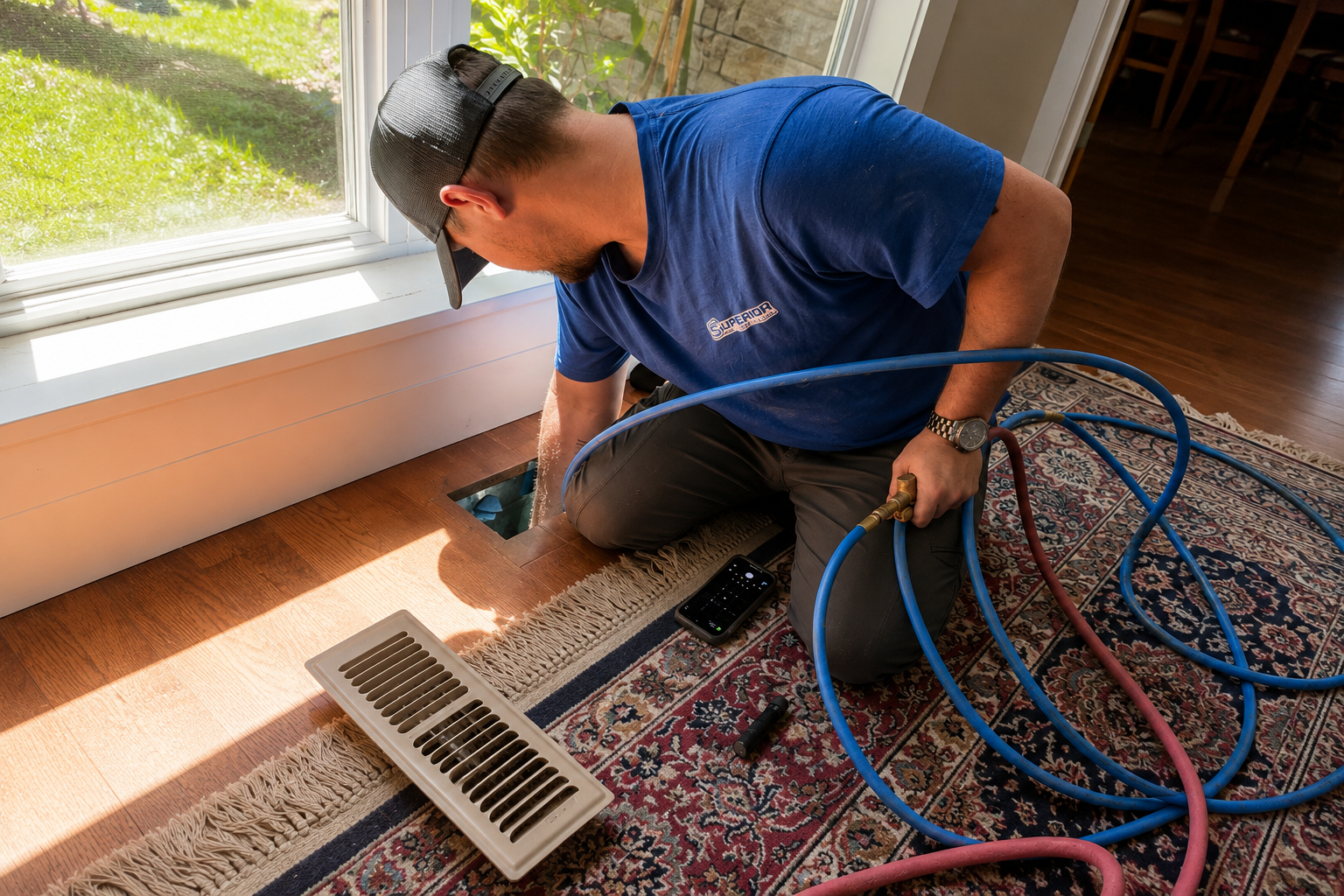
For most Treasure Valley homes, we recommend cleaning air ducts every 3 to 5 years. But wildfire smoke and high-desert dust are all facts of life for us here in Boise, so that timeline can move faster than the average suggests.
You may be overdue for professional air duct cleaning in Boise if,
It's been more than 3 to 5 years since your last duct cleaning
Dust quickly returns around vents and registers after cleaning
Your home smells musty or smoky when the HVAC system turns on
Family members experience worsening allergies or respiratory irritation indoors
Some rooms have noticeably weaker airflow than others
Your energy bills have increased without a clear explanation
You've recently completed a renovation or lived through a Boise wildfire smoke season
If you checked off more than one item on that list, your ductwork may be affecting your home's air quality and HVAC efficiency more than you realize.
Where Dirt & Allergens Hide
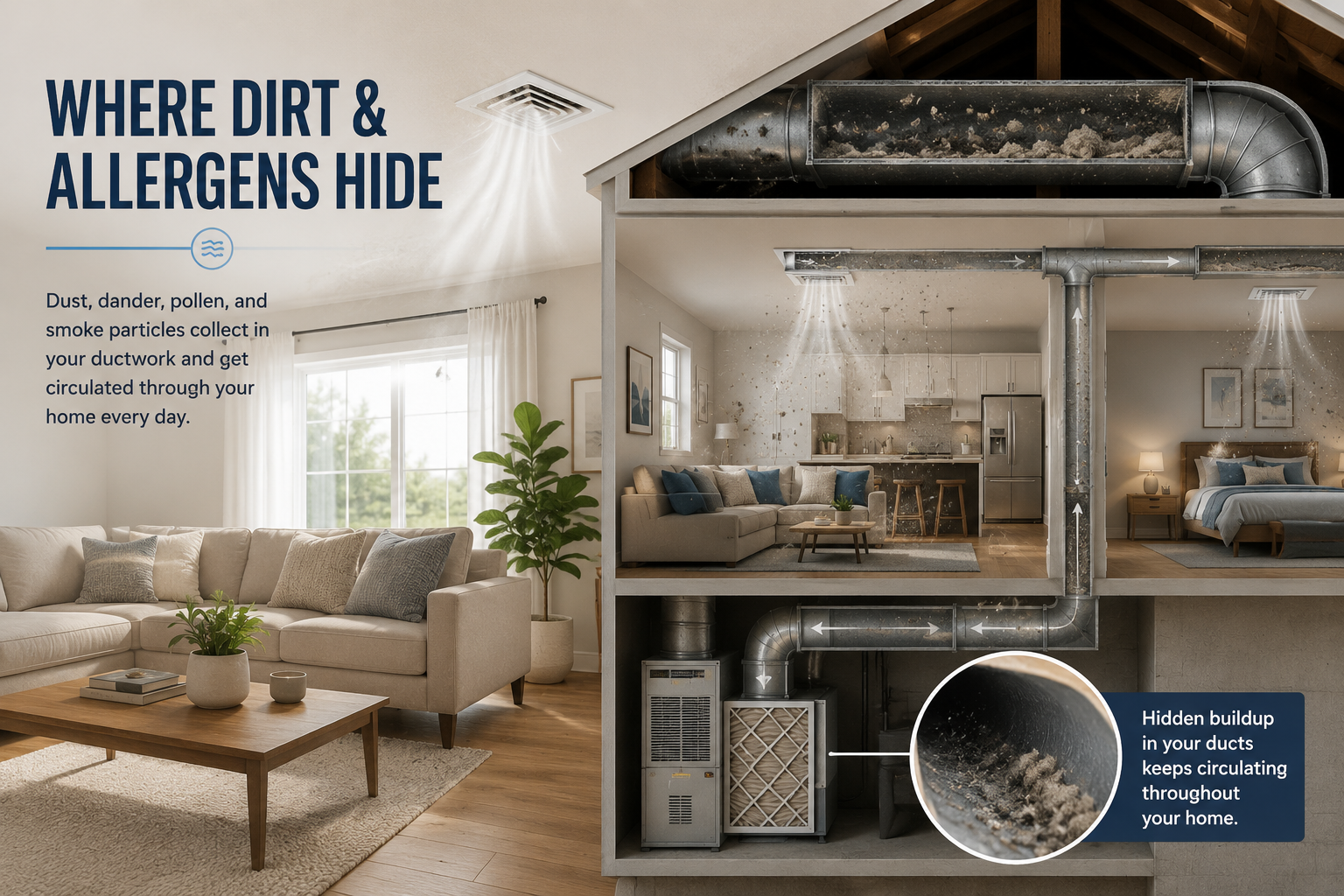
Most Boise homeowners do a great job keeping the visible parts of their homes clean. We wipe down the countertops and vacuum the floors. We even scrub the bathrooms with varying degrees of enthusiasm depending on the day and how much company is coming over.
Meanwhile, there's an entire system moving air through every room of your home every day, and most homeowners rarely think about it until someone in your family can't stop sneezing or your whole house smells faintly like a room that's been sealed since the previous owners left when the HVAC is turned on.
That system is your ductwork. And once dust or smoke particles settle in, every heating and cooling cycle sends them right back into the air your family breathes.
When Should You Schedule Air Duct Cleaning in Boise?
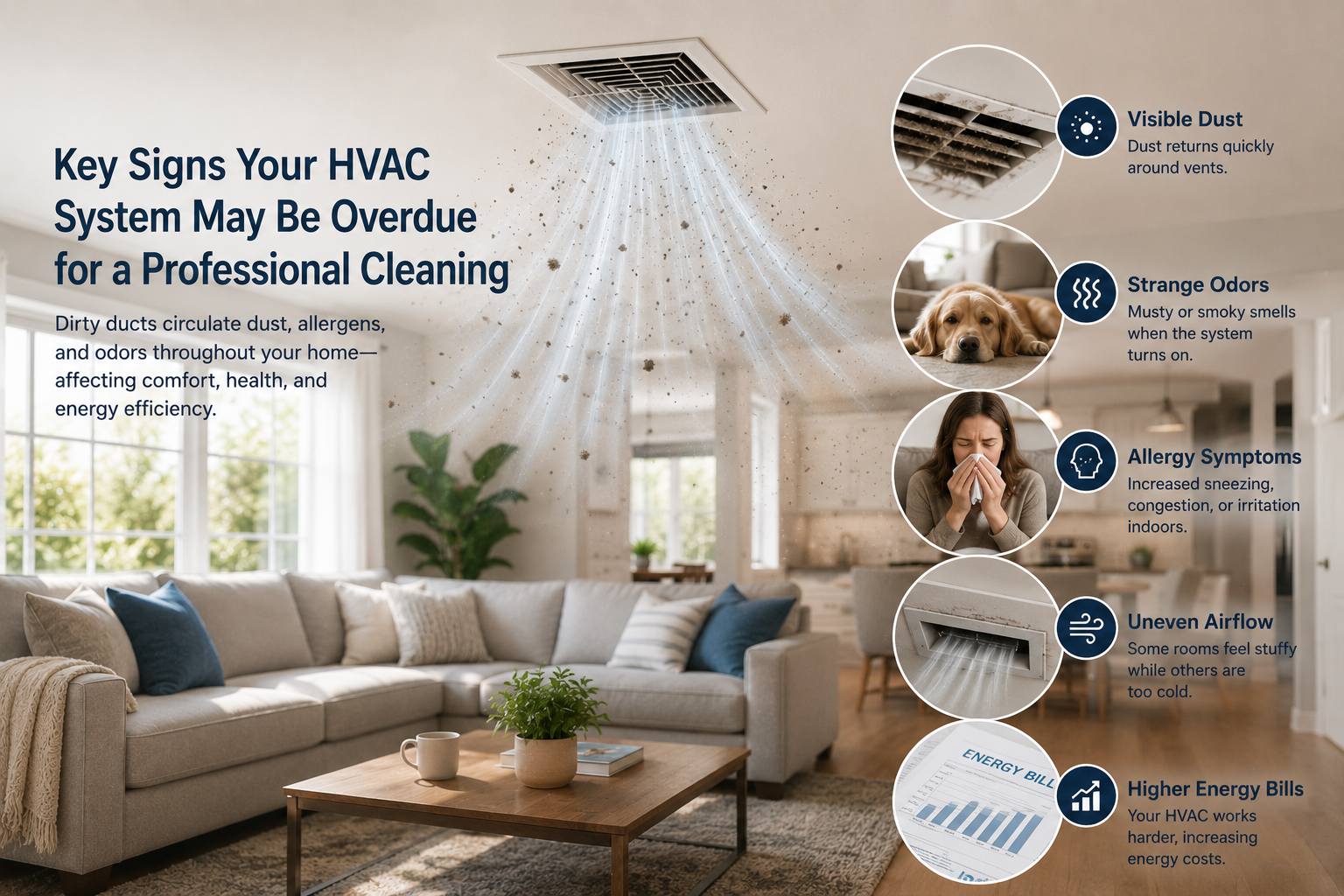
Below are the clearest signs your HVAC systems may be overdue for a professional air duct cleaning, and why Treasure Valley homeowners have more reason than most to take them seriously.
Visible Dust Around Air Vents and Registers
This is one of the most common signs we see during air duct inspections across Boise and the Treasure Valley. Your HVAC system is pushing contaminated air through the ductwork and back into your space if dust is appearing around your vents.
Every home collects dust. What catches our attention is when it returns almost immediately after you've cleaned. That kind of persistence is a ductwork problem wearing a housekeeping disguise. Our high-desert climate also doesn't help us either. We have a lot of fine dust and pollen that is a nuisance in the Treasure Valley. It gets on everything, and it starts to circulate in your house once it finds its way into your HVAC system every time your heating or cooling kicks on.
The easiest check requires no tools and about thirty seconds. Look at your vent covers and the surfaces immediately around them. Dark buildup along the edges or a ring of discoloration on the wall or ceiling nearby are all signs that what's coming out of your ducts isn't clean air.
Strange Odors Coming From Air Vents
Your home should smell fresh and comfortable. A stale or musty smell that shows up the moment your heating or cooling kicks on is one of the most reliable indicators that something inside your ductwork needs attention.
Sometimes it starts as a faint dustiness or an odor you can't quite place but can't quite ignore either. Other times it's less subtle, and your whole house gets a reminder every single time the system cycles on.
There are usually two common causes behind this.
Accumulated dust and debris inside the ducts
Moisture buildup that may contribute to microbial growth
A quick way to tell the difference is when the odor fades within a few minutes of the system running, it may simply be surface dust burning off or briefly circulating. But as per our experience, persistent smells that return every time the HVAC runs always point to deeper buildup within the system.
This becomes especially relevant during our Boise wildfire seasons when smoke particles enter our homes and settle into ductwork. Fine smoke particles infiltrate HVAC systems and embed in ductwork, where they can continue circulating indoors for weeks or even months after the skies outside have cleared.
Our certified technicians use eco-safe sanitizing solutions designed to address buildup inside the system because your HVAC system should not smell like a storage room that has been sealed since 2011.
Worsening Allergies or Respiratory Symptoms Indoors
In case people in your home are consistently sneezing, congested, coughing, or dealing with irritated eyes more often at your home than anywhere else, your ductwork is a significant part of the problem.
Air ducts accumulate dust, pollen, pet dander, dust mites, mold spores, smoke particles, and general debris. Every HVAC cycle then becomes an opportunity to redistribute them through every room in the house.
You vacuum. You dust. You replace air filters. But the ducts keep cycling the same contaminants back into the air your family breathes. The American Lung Association recognizes indoor air quality as a meaningful factor in respiratory comfort, particularly for people with allergies or sensitivities. And in Boise, the seasonal wildfire smoke situation makes this much more of a health consideration.
In our experience, homes with pets, allergy sufferers, or family members with asthma benefit from more frequent duct cleaning. The buildup simply accumulates faster, and the impact on daily comfort is more immediate.
Superior Carpet & Air Duct Cleaning uses HEPA-filtered vacuum systems that capture 99.97% of airborne particles during the cleaning process, thus contaminants get removed from the system entirely.
Uneven Airflow Between Rooms
Does one room in your home feel like a freezer and another is inexplicably stuffy despite identical thermostat settings?
Accumulated buildup inside the ducts creates partial blockages that disrupt how air moves through the system. The result is an uneven distribution.
The easiest thing we recommend is for you to compare airflow from room to room. Hold your hand near vents in different rooms and compare how much air is actually coming through. A vent that feels noticeably weaker than others in the same home is a reasonable indicator that something is interfering with airflow somewhere in the system.
Rising Energy Bills Without Possible Explanation
Nobody likes opening a utility bill and wondering why it's suddenly higher than usual.
When debris accumulates inside ductwork, it restricts the pathways your HVAC system relies on to move air efficiently through the home. The system compensates by running longer and working harder to reach the same temperature it used to hit with less effort. That extra strain shows up as a utility bill that's a little higher than it should be without an obvious reason why.
The U.S. Department of Energy has noted that a significant portion of heating and cooling energy is lost to inefficiencies within HVAC systems. Restricted airflow from buildup inside ducts is a contributing factor that often goes unaddressed simply because it's invisible. Unlike a faulty thermostat or a drafty window, dirty ducts don't give you an obvious visual cue.
However, air duct cleaning isn't a guaranteed fix for every elevated energy bill and any company that promises otherwise is overselling. But maintaining cleaner airflow pathways is a legitimate part of keeping an HVAC system running at reasonable efficiency.
Life Events That Change Your Indoor Air Quality
Certain life events almost automatically justify an air duct inspection by us, even if everything looks clean on the surface.
When you move into an older home, you usually have no idea when the ductwork was last cleaned or what conditions the previous occupants lived with, and years of neglected maintenance do not exactly come with a disclosure label attached to the vents.
Drywall particles, sawdust, insulation debris, and fine construction materials also enter duct systems during remodeling projects and continue circulating long after the renovation is finished.
Wildfire season has unfortunately become part of life here in Idaho. Smoke particles are extremely small and can penetrate indoor environments easily as per EPA’s wildfire smoke guidance. Those particles often settle into HVAC systems and ductwork during smoke events.
Our professional air duct cleaning gives you a cleaner starting point to remove years of unknown buildup from the system. We offer post-remodel and new-home air duct cleaning in Boise specifically for situations like these.
Recommended Schedule for Air Duct Cleaning in Boise
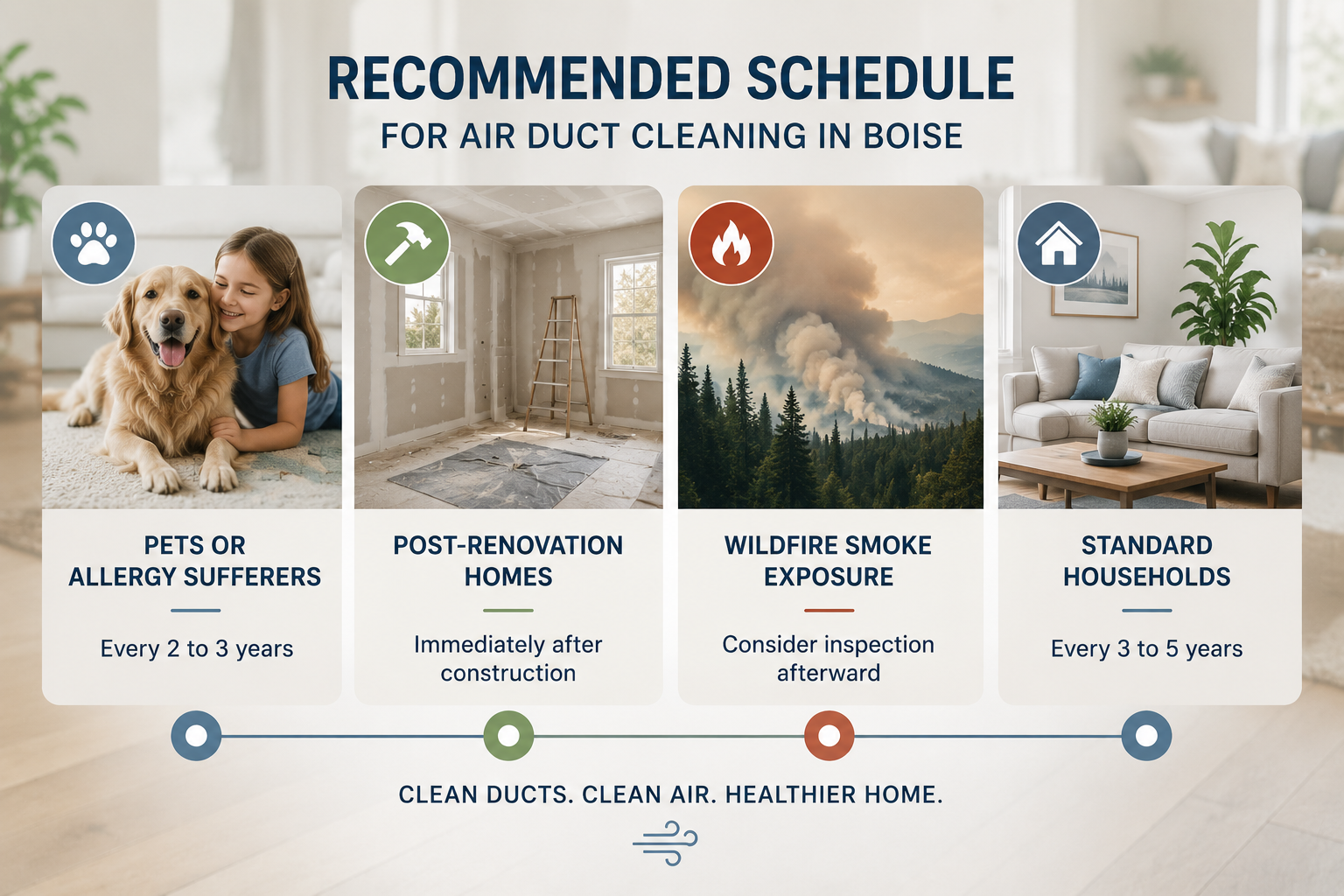
Based on what we see in Boise-area homes, professional air duct cleaning every 3 to 5 years is a good rule of thumb for most homes here. But several common household factors push that timeline closer.
homes with pets or allergy sufferers → every 2 to 3 years
post-renovation homes → immediately after construction
homes affected by wildfire smoke → consider inspection afterward
standard households with minimal issues → every 3 to 5 years
We understand that air duct cleaning isn't something you might think about often. But because your HVAC system circulates air through your home every day, staying ahead of buildup can make a noticeable difference in your home's cleanliness and air quality.
The Bottom Line
Your HVAC system runs through every season in Boise. What sits inside those ducts eventually circulates through your home. So, if you are noticing any of the aforementioned signs, you are overdue for professional air duct cleaning.
Superior Carpet & Air Duct Cleaning offers professional air duct cleaning in Boise, Meridian, Nampa, Eagle, and across the Treasure Valley using HEPA-filtered systems and eco-safe cleaning solutions designed for healthier indoor environments. Our clients also pair air duct cleaning with carpet cleaning to reduce household allergens more comprehensively and improve overall indoor comfort.
Common Questions About Air Duct Cleaning in Boise
How do I know if my air ducts need cleaning? The most common signs are dust that reappears around vents shortly after cleaning, stale or musty odors when the HVAC runs, worsening allergy or respiratory symptoms indoors, uneven airflow between rooms, and visible debris around registers.
How often should air ducts be cleaned in Idaho? Every 3 to 5 years for most homes but Treasure Valley homeowners have good reason to revisit that timeline more frequently. Homes with allergy sufferers or recent renovation work benefit from cleaning every 2 to 3 years.
Can dirty air ducts make you sick? They can absolutely make existing conditions worse. Ducts that have accumulated dust, pollen, pet dander, mold spores, or smoke particles recirculate those contaminants through your home every time the system runs.
Does air duct cleaning help with wildfire smoke? Yes, fine smoke particles infiltrate HVAC systems and settle inside ductwork, where they continue circulating indoors for weeks or months after the smoke outside has cleared. Professional duct cleaning removes those embedded particles.
How long does air duct cleaning take in Boise? Most residential duct cleaning appointments take 2 to 4 hours depending on the size of the home and the layout of the HVAC system, as well as the condition of the ducts. We use sealed equipment and negative-air systems to keep the process contained and the rest of your home undisturbed.
Is air duct cleaning worth it? Clean ducts support better indoor air quality and more efficient HVAC performance for a home environment that's healthier. Pairing air duct cleaning with carpet cleaning takes the allergen-reduction effort even further by addressing both the floors and the air system at the same time.